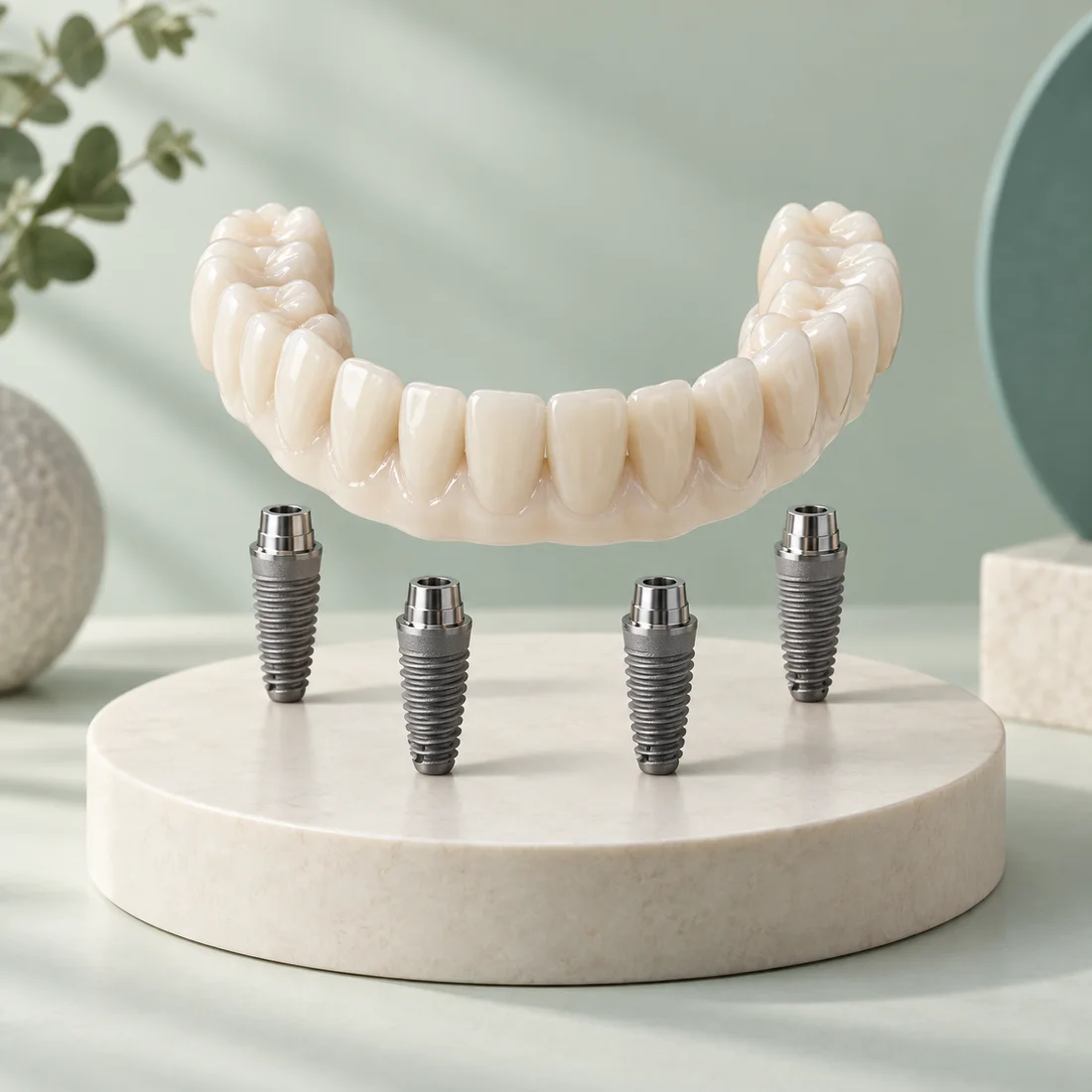
Missing most or all of your teeth can affect much more than your smile. It may make eating difficult, change the way you speak, reduce confidence, and affect everyday comfort. For patients looking for a fixed alternative to removable dentures, All-on-4 dental implants may provide an effective full-arch tooth replacement option. The All-on-4 treatment concept uses four strategically positioned dental implants to support a fixed prosthetic dental arch. Instead of replacing every missing tooth with an individual implant, a complete set of replacement teeth can be supported by a smaller number of implants.
This approach may be considered for patients who have lost all or most of their teeth, have severely damaged teeth that cannot predictably be restored, or experience difficulties with conventional removable dentures. This guide explains what All-on-4 dental implants are, how the procedure works, who may be suitable, treatment stages, recovery, benefits, potential risks, maintenance, and frequently asked questions.
What Are All-on-4 Dental Implants?
All-on-4 is a full-arch dental implant treatment concept designed to replace an entire upper or lower arch of missing or failing teeth using four dental implants. The implants are surgically positioned in the jawbone and act as foundations for a fixed dental prosthesis. In suitable cases, the posterior implants may be placed at an angle to make effective use of the available bone. Once the implants are placed, they support a prosthetic arch designed to restore the appearance and function of multiple teeth. Unlike conventional removable dentures, an implant-supported restoration is anchored to dental implants rather than relying primarily on the gums for support.
Depending on the patient’s oral health, bone structure, bite, medical history, and treatment plan, a temporary fixed prosthesis may sometimes be attached during the early stage of treatment. The definitive restoration is generally produced after the implants and surrounding tissues have healed sufficiently.
How Does the All-on-4 Treatment Work?
The principle behind All-on-4 treatment is relatively straightforward: four implants are used to support a complete dental arch. However, the actual procedure requires detailed planning. Before treatment begins, the dentist or oral surgeon evaluates factors such as:
- Jawbone volume and quality
- Remaining teeth
- Gum health
- Bite relationship
- Position of anatomical structures
- General medical history
- Previous dental treatments
- Functional and aesthetic expectations
Digital imaging, dental X-rays, and three-dimensional scans such as CBCT may be used when clinically appropriate. The position, length, diameter, and angle of each implant are planned according to the individual anatomy of the patient. In many All-on-4 cases, two implants are positioned toward the front of the jaw while two posterior implants are placed farther back. The exact configuration can vary according to the clinical situation. This strategic implant placement helps distribute forces across the prosthetic arch while making use of available bone.
Who May Be Suitable for All-on-4 Dental Implants?
All-on-4 treatment may be considered for adults who have lost most or all of their teeth or whose remaining teeth have a poor long-term prognosis. Potential candidates may include people who:
Have a completely toothless upper or lower jaw, have multiple missing teeth, have extensively damaged or mobile teeth, experience difficulties with removable dentures, or want to explore a fixed implant-supported alternative. However, not every patient is automatically suitable for All-on-4 treatment. Successful implant treatment depends on several individual factors. The condition of the jawbone, gums, remaining teeth, bite, oral hygiene, smoking habits, medications, and general health may all influence treatment planning and healing. Certain medical conditions or medications may also require additional assessment or coordination with the patient’s physician. A clinical examination and appropriate diagnostic imaging are therefore essential before determining whether All-on-4 is appropriate.
All-on-4 Treatment Process
Although every treatment plan is individualized, the All-on-4 process generally involves several stages.
1. Initial Consultation
Treatment begins with a comprehensive dental consultation. The dentist evaluates the patient’s teeth, gums, jawbone, bite, facial proportions, and overall oral health. The patient’s expectations and previous dental history are also discussed. This appointment is particularly important because full-arch implant treatment involves both surgical and prosthetic planning. Patients should inform their dentist about medical conditions, allergies, medications, previous surgeries, and smoking or tobacco use.
2. Diagnostic Imaging and Treatment Planning
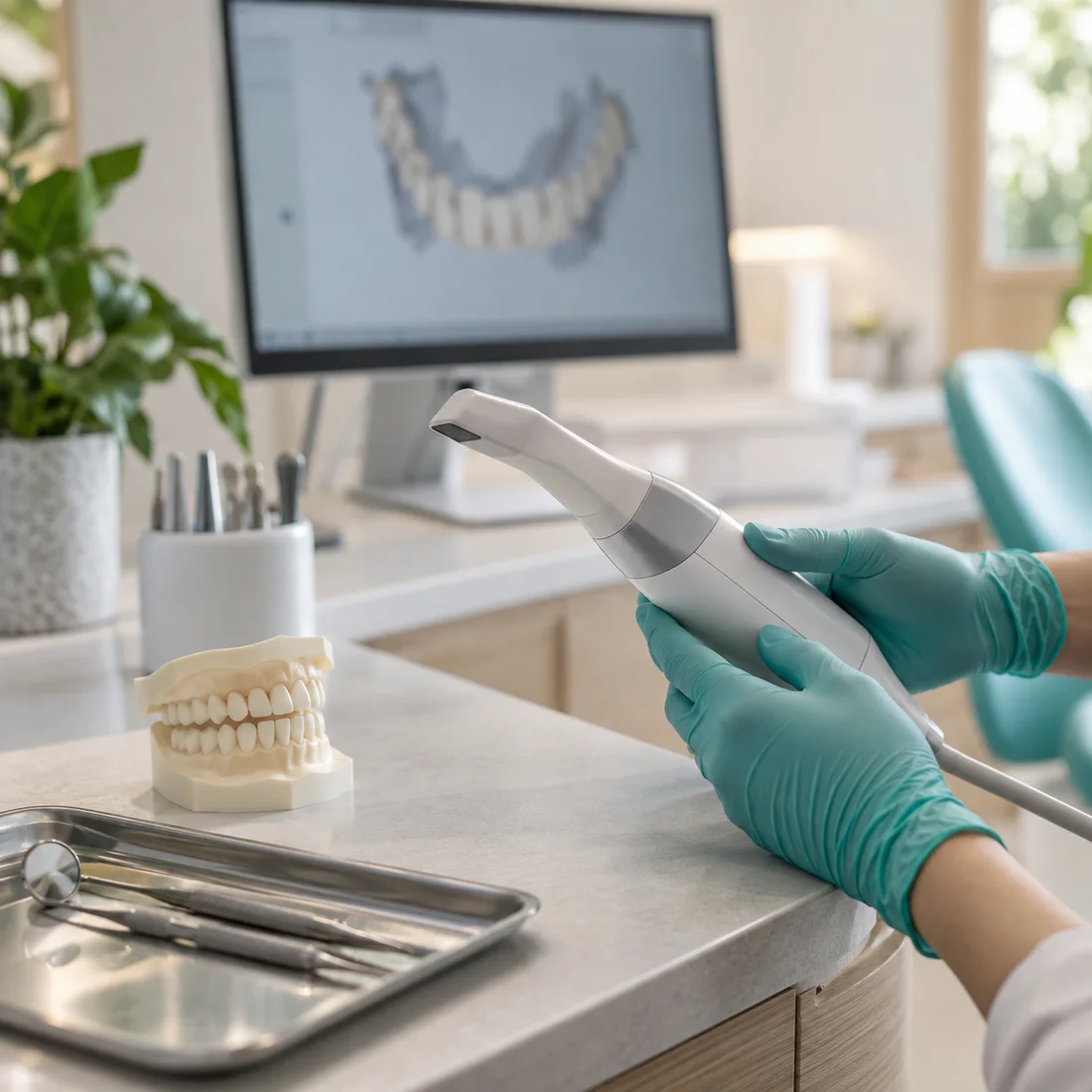
Detailed imaging may be required to evaluate the jawbone and important anatomical structures. A CBCT scan can provide three-dimensional information about bone height, width, density, and the location of structures such as nerves and sinus cavities. Digital impressions or conventional impressions may also be taken. The dental team then plans the implant positions and designs the intended prosthetic restoration. Modern digital dentistry may allow the surgical and restorative stages to be planned together, helping the dental team consider both implant stability and the final position of the replacement teeth.
3. Preparation and Removal of Unsalvageable Teeth
If damaged or failing teeth remain in the treatment area, they may need to be extracted. Depending on the individual case, tooth extraction and implant placement may sometimes be performed during the same surgical appointment. In other situations, additional healing or preparatory treatment may be required before implant placement. The appropriate approach depends on infection, bone condition, gum health, implant stability requirements, and other clinical factors.
4. Placement of the Dental Implants
During surgery, the implants are carefully positioned in the jaw according to the treatment plan. Local anaesthesia is commonly used. Sedation options may also be available depending on the clinic, patient’s needs, and medical suitability. Four implants are typically used for each treated arch in the All-on-4 concept. The dentist or surgeon assesses implant stability during the procedure. This is especially important when immediate loading with a temporary fixed prosthesis is being considered.
5. Temporary Teeth
One of the features commonly associated with All-on-4 treatment is the possibility of receiving a temporary fixed restoration shortly after implant placement. However, same-day fixed teeth are not appropriate in every case. Whether immediate loading is possible depends on factors including implant stability, bone quality, bite forces, surgical findings, and the clinician’s assessment. When immediate loading is clinically appropriate, a temporary prosthesis is designed to protect the healing implants while providing appearance and limited function. Patients must follow dietary and oral hygiene instructions carefully during this stage.
6. Healing and Osseointegration
After implant placement, the jawbone gradually heals around the implant surfaces through a biological process known as osseointegration. This process is fundamental to dental implant treatment because it allows the implants to become stable foundations for the final prosthesis. Healing time varies between patients and depends on factors such as bone quality, implant stability, oral hygiene, smoking, general health, and the complexity of the procedure. During the healing period, patients are generally advised to avoid excessive forces on the implants and follow the dietary instructions provided by their dental team.
7. Final Fixed Prosthesis
After sufficient healing, the temporary restoration can be replaced with the definitive prosthesis when appropriate. New impressions or digital scans may be taken to produce the final restoration. The dental team evaluates the bite, tooth shape, colour, smile line, speech, comfort, and relationship between the prosthesis and gums. The final prosthesis is designed to provide a balance between aesthetics, function, durability, hygiene access, and patient comfort.

Benefits of All-on-4 Dental Implants
All-on-4 treatment can offer several potential advantages for appropriately selected patients.
Fixed Teeth
One of the main reasons patients consider All-on-4 treatment is the possibility of having a fixed dental restoration. Unlike a conventional removable denture, the prosthesis is supported by implants and is not normally removed by the patient for daily cleaning.
Full-Arch Replacement With Four Implants
The treatment concept is designed to support a complete dental arch using four strategically positioned implants. This can reduce the number of implants required compared with treatment approaches that use a larger number of individual implants. However, the appropriate number of implants should always be determined according to the patient’s individual anatomy and clinical needs.
Improved Stability
Implant-supported teeth can provide greater stability than conventional removable dentures for many patients. This may improve confidence during everyday activities such as speaking and eating. The degree of chewing function achieved varies between individuals, and patients should follow their dentist’s recommendations regarding food choices, particularly during healing.
Natural-Looking Smile Design
The prosthetic restoration can be customized according to factors such as facial proportions, lip support, tooth colour, tooth shape, smile line, and bite. Digital smile planning and modern dental laboratory techniques may be used to create a restoration designed to complement the patient’s facial appearance.
Reduced Need for Extensive Bone Grafting in Some Cases
Strategic positioning of implants may allow clinicians to use available bone efficiently. As a result, some patients may be treated without extensive bone grafting. This does not mean that All-on-4 eliminates the need for bone grafting in every case. Some patients may still require additional surgical procedures depending on their anatomy and treatment requirements.
All-on-4 vs Traditional Dentures
Traditional removable dentures and All-on-4 implant-supported teeth replace missing teeth in fundamentally different ways. A conventional denture primarily rests on the gums and underlying tissues. It is removable and usually needs to be taken out for cleaning. All-on-4 uses implants placed within the jawbone to support a fixed prosthesis. For some patients, this can provide improved stability and reduce movement during function. However, implant treatment involves surgery, requires adequate healing, carries surgical and prosthetic risks, and generally requires a greater initial investment than conventional dentures. The most appropriate option depends on the patient’s oral condition, health, expectations, anatomy, lifestyle, and budget.
All-on-4 vs Individual Dental Implants
Replacing multiple missing teeth does not necessarily require one implant for every missing tooth. When an entire dental arch requires replacement, strategically positioned implants can support multiple prosthetic teeth. All-on-4 specifically uses four implants as part of a full-arch rehabilitation concept. Other full-arch treatments may use a different number of implants depending on bone availability, prosthetic design, bite forces, clinician preference, and individual risk factors. Therefore, patients should not assume that four implants are automatically the ideal solution for every full-arch case.
Is the All-on-4 Procedure Painful?
The surgical procedure is normally performed under appropriate local anaesthesia, which is intended to minimize discomfort during treatment. Some swelling, tenderness, bruising, or discomfort may occur after surgery. The intensity and duration vary from person to person and can be influenced by the extent of surgery, whether teeth were extracted, individual healing response, and other factors. Patients should follow the postoperative instructions and medication guidance provided by their treating clinician. Severe or increasing pain, persistent bleeding, significant swelling, fever, or other unexpected symptoms should be reported to the dental clinic promptly.
Recovery After All-on-4 Treatment
Recovery varies considerably between patients. Swelling and tenderness can occur during the first few days following surgery. Patients may be advised to rest, maintain careful oral hygiene, and modify their diet. A soft-food diet is commonly recommended during the early healing period. Foods that place excessive force on the temporary prosthesis should generally be avoided until the dental team confirms that normal function can gradually resume. Patients should attend scheduled follow-up appointments so the dentist can evaluate healing, implant stability, bite, prosthetic condition, and oral hygiene.
What Can You Eat After All-on-4 Surgery?
Diet is an important part of the healing process. Immediately after surgery, patients may be advised to choose soft foods that require minimal chewing. Depending on individual instructions, examples may include soups at a safe temperature, yoghurt, eggs, soft vegetables, pasta, mashed foods, and other easy-to-chew meals. Hard, crunchy, sticky, or very chewy foods may place unnecessary pressure on healing implants and should generally be avoided until approved by the treating dentist. The dental team should provide personalized dietary guidance based on the surgical procedure and type of temporary restoration.
How Long Does All-on-4 Treatment Take?
There is no single treatment duration that applies to every patient. In suitable cases, implants and a temporary fixed prosthesis may be placed within a short treatment period. However, biological healing and osseointegration still require time. The definitive restoration is typically planned after an appropriate healing period. Total treatment time may be influenced by:
Bone condition, tooth extractions, infection, additional surgical procedures, implant stability, healing response, prosthetic requirements, and whether treatment involves one or both arches. Patients should receive an individualized timeline after clinical examination and diagnostic planning.
How Long Do All-on-4 Dental Implants Last?
Dental implants are designed as long-term tooth replacement solutions, but no implant treatment can be guaranteed to last for a specific number of years. Long-term outcomes depend on many factors, including oral hygiene, smoking, general health, bite forces, regular professional maintenance, prosthetic design, implant position, and biological complications. The prosthetic teeth and components may also experience wear over time and can require maintenance, repair, adjustment, or replacement. Regular dental examinations are therefore important even when a patient no longer has natural teeth in the treated arch.
How Do You Clean All-on-4 Dental Implants?
Daily cleaning is essential. Although the prosthesis is fixed, plaque and food debris can accumulate around the implants and underneath the restoration. Patients may be advised to use a combination of:
- A suitable toothbrush
- Interdental cleaning aids
- Implant-specific floss or super floss
- Small interdental brushes
- Oral irrigators when recommended by the dentist
The exact technique depends on the design of the prosthesis. Professional implant maintenance appointments are also important because the dental team can examine the gums, implants, prosthetic components, bite, and areas that may be difficult to clean at home.
Can You Smoke After All-on-4 Treatment?
Smoking can negatively affect oral healing and is associated with increased risks in implant dentistry. Patients who smoke should discuss this openly with their implant dentist before treatment. The clinician may recommend stopping smoking before and after surgery and may discuss how tobacco use can affect healing and long-term implant health. Patients should follow individualized medical and dental advice rather than assuming that temporary smoking cessation eliminates all associated risks.
Potential Risks and Complications
All-on-4 is a surgical and prosthetic dental treatment and, like other medical or dental procedures, involves potential risks. Possible complications may include infection, bleeding, swelling, temporary discomfort, delayed healing, implant failure, gum inflammation, prosthetic fracture, loosening of components, bite-related problems, and aesthetic or functional concerns. Depending on implant location and individual anatomy, additional surgical risks may also exist. Careful diagnosis, treatment planning, appropriate surgical technique, oral hygiene, and regular follow-up can help manage risk, but complications cannot be completely eliminated. Patients should receive personalized information about potential benefits, alternatives, limitations, and risks before consenting to treatment.

All-on-4 Dental Implants Abroad
Some patients consider travelling abroad for All-on-4 treatment because of cost differences, treatment availability, or the opportunity to combine dental care with travel. When considering dental treatment abroad, price should not be the only factor. Patients should evaluate the qualifications and experience of the treating clinician, diagnostic process, implant system, prosthetic materials, sterilization protocols, laboratory standards, treatment schedule, follow-up arrangements, guarantees or warranty terms where applicable, and what happens if complications occur after returning home. Full-arch implant treatment requires ongoing care. Patients should therefore understand how postoperative reviews, maintenance, repairs, and unexpected complications will be managed.
How Much Does All-on-4 Treatment Cost?
The cost of All-on-4 dental implant treatment varies considerably. Factors that can affect the total price include:
- Whether one or both arches are treated
- Number and condition of remaining teeth
- Required extractions
- Bone and gum condition
- Implant system
- Type of temporary restoration
- Material used for the final prosthesis
- Additional surgical procedures
- Anaesthesia or sedation requirements
- Diagnostic imaging
- Laboratory procedures
- Follow-up and maintenance arrangements
For this reason, an accurate quotation usually requires a clinical assessment and treatment plan. Patients comparing prices should also check exactly what is included in each quotation, as apparently similar treatment packages may include different procedures, materials, or follow-up services.
Why Is Detailed Planning Important?
All-on-4 treatment is not simply an implant placement procedure. It is a complete oral rehabilitation involving surgical, functional, and aesthetic considerations. The dental team must consider where the implants can be safely positioned as well as where the final teeth should be located. The bite must be carefully planned because excessive or poorly distributed forces may affect implants and prosthetic components. Aesthetic planning is also important, particularly for patients who have experienced significant bone or gum loss. In some cases, the prosthesis replaces not only teeth but also a portion of lost gum volume. Successful treatment therefore requires coordination between clinical examination, imaging, surgical planning, prosthetic design, dental laboratory procedures, and long-term maintenance.
Book an All-on-4 Dental Implant Consultation
If you have lost most or all of your teeth, struggle with removable dentures, or have multiple teeth that cannot be predictably restored, All-on-4 dental implants may be one of the treatment options worth discussing with an implant dentist. The first step is a comprehensive assessment. During your consultation, the dental team can examine your teeth and gums, evaluate your jawbone, review diagnostic images, discuss your expectations, and explain the treatment options appropriate for your individual situation. A personalized treatment plan can then outline the proposed procedure, treatment stages, expected timeline, prosthetic options, potential risks, alternatives, and costs.
Contact our dental clinic to arrange an All-on-4 consultation and learn whether full-arch implant treatment may be suitable for you.
This page provides general information and is not a substitute for an individual dental examination, diagnosis, or personalized medical advice.