A Fixed Full-Arch Solution Supported by Six Dental Implants
Losing most or all of your teeth can affect eating, speaking, facial appearance, confidence, and everyday comfort. While conventional removable dentures remain an option for replacing missing teeth, many patients also explore fixed implant-supported solutions that provide greater stability. All-on-6 dental implants are a full-arch implant treatment concept in which a complete set of replacement teeth is supported by six strategically positioned dental implants. The treatment may be considered for patients who have lost all or most of their teeth, experience difficulties with removable dentures, or have severely compromised teeth that cannot be predictably restored.
By using six implants distributed across the dental arch, the treatment aims to provide a stable foundation for a fixed full-arch prosthesis while distributing chewing forces across multiple implant positions. However, All-on-6 is not automatically the best solution for every patient. Bone structure, gum health, remaining teeth, bite forces, medical history, oral hygiene, and several other factors need to be evaluated before treatment. This guide explains what All-on-6 dental implants are, how the treatment works, who may be suitable, the procedure, recovery, benefits, potential risks, costs, maintenance, and the differences between All-on-4 and All-on-6 dental implants.
What Are All-on-6 Dental Implants?
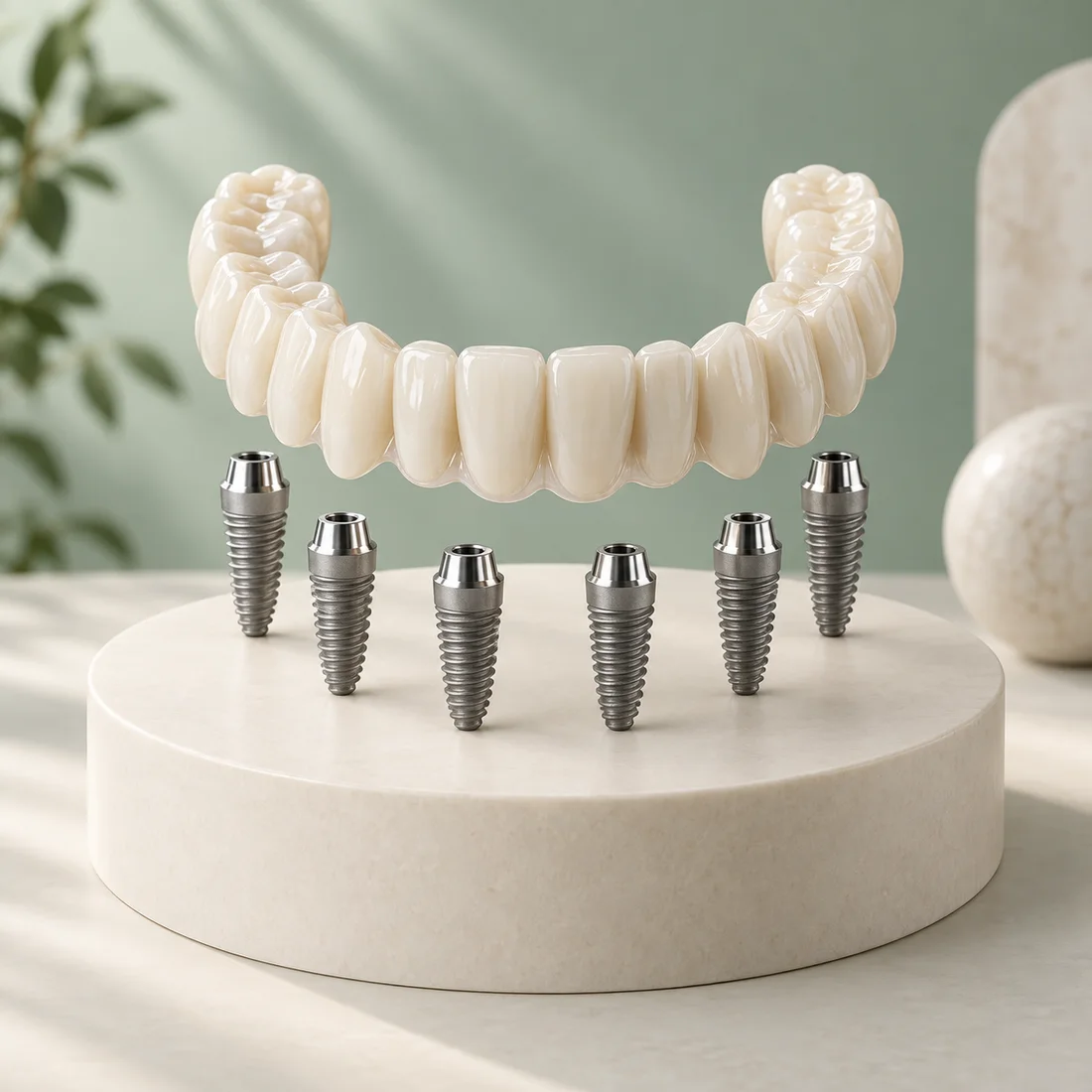
All-on-6 dental implants are designed to replace an entire upper or lower arch of missing or failing teeth using six dental implants to support a prosthetic dental arch. Instead of placing an individual implant for every missing tooth, six implants are positioned at selected locations within the jawbone. These implants act as foundations for a bridge containing multiple replacement teeth. The result is a full-arch restoration that is supported by dental implants rather than resting primarily on the gums like a conventional removable denture.
The term “All-on-6” generally describes the number of implants supporting the dental arch. The precise position, angle, length, and diameter of the implants are determined according to the patient’s individual anatomy and treatment plan. For some patients, six implants may provide an appropriate distribution of support across the jaw. For others, a different implant configuration may be more suitable. This is why full-arch implant treatment should always begin with individualized diagnosis rather than selecting a treatment solely according to its name.
How Does All-on-6 Treatment Work?
The principle behind All-on-6 treatment is to create a stable foundation for a complete dental arch using six implants. The implants are surgically placed into the jawbone at carefully planned positions. Once placed, the surrounding bone gradually integrates with the implant surfaces through a biological process called osseointegration. When sufficient stability and healing have been achieved, the implants can support a fixed full-arch dental restoration. In suitable cases, a temporary fixed prosthesis may be connected to the implants shortly after surgery. This approach is commonly known as immediate loading. However, same-day or immediate fixed teeth are not suitable for every patient.
The dentist must consider implant stability, bone quality, bite forces, surgical findings, and other clinical factors before deciding whether the implants can safely support a temporary restoration during the healing period.
Who May Be Suitable for All-on-6 Dental Implants?
All-on-6 treatment may be considered for adults who require replacement of most or all teeth in one or both dental arches. Potential candidates may include patients who:
- Have lost all teeth in the upper or lower jaw
- Have multiple missing teeth
- Have severely damaged or failing teeth
- Experience difficulties with conventional dentures
- Want to explore a fixed alternative to removable dentures
- Require comprehensive full-mouth dental rehabilitation
However, having missing teeth does not automatically make someone suitable for All-on-6 treatment. The dentist must evaluate the patient’s jawbone, gums, bite, remaining teeth, medical history, medications, oral hygiene, smoking habits, and overall treatment expectations. Certain medical conditions and medications may influence healing or implant treatment. Patients should therefore provide their dentist with an accurate medical history before surgery.
All-on-6 Dental Implant Treatment Process
All-on-6 treatment usually involves several stages. The exact process and timeline can vary depending on the patient’s clinical condition.
1. Initial Consultation
The first step is a comprehensive dental examination. The dentist evaluates the condition of the teeth, gums, jawbone, bite, existing restorations, and surrounding oral tissues. The patient’s medical history is also reviewed. This stage allows the dental team to determine whether implant treatment is appropriate and whether All-on-6 is a suitable treatment concept. Patients can also discuss their functional and aesthetic expectations during the consultation.
2. X-Rays and 3D Imaging
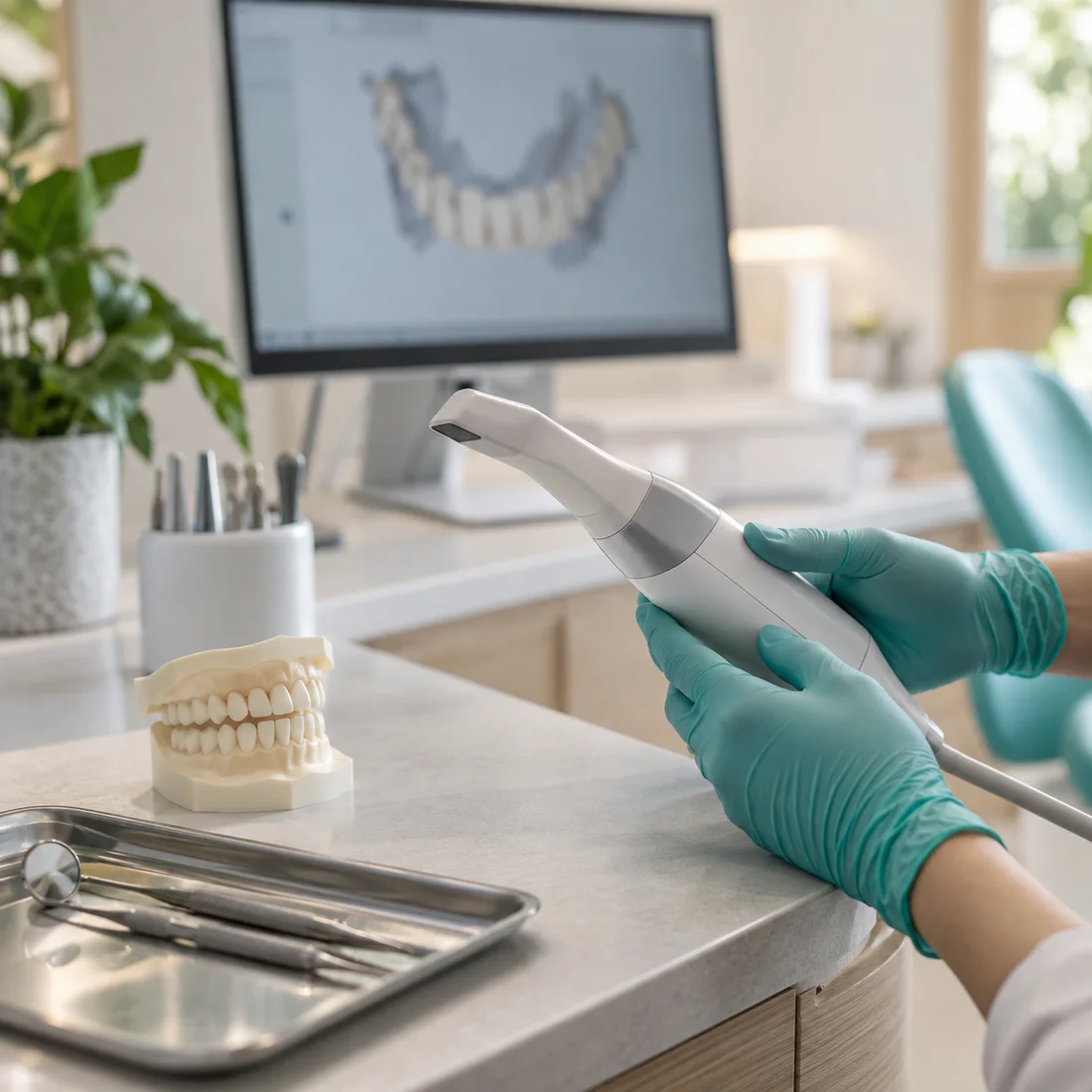
Detailed diagnostic imaging is usually an important part of full-arch implant planning. Dental X-rays may be used, while CBCT imaging can provide a three-dimensional view of the jaw when clinically indicated. A CBCT scan can help assess:
- Bone height and width
- Bone anatomy
- Position of nerves
- Sinus anatomy
- Potential implant locations
- Existing infections or other relevant structures
Digital impressions or intraoral scans may also be taken to help plan the prosthetic restoration.
3. Digital Treatment Planning
Full-arch implant treatment involves more than simply identifying areas where implants can be placed. The position of the future teeth must also be considered. The dental team may plan implant positions in relation to the proposed prosthetic teeth, bite, smile line, available bone, facial proportions, and hygiene requirements. This combined surgical and prosthetic approach is particularly important for full-mouth rehabilitation.
4. Removal of Failing Teeth
Some patients considering All-on-6 treatment still have natural teeth. If these teeth cannot be predictably restored, extraction may be recommended. In selected cases, tooth extractions and implant placement can take place during the same surgical appointment. In other cases, healing may be required before implant placement. The decision depends on the condition of the teeth, infection, available bone, soft tissues, implant stability, and the overall treatment plan.
5. Placement of Six Dental Implants
During surgery, six dental implants are positioned within the jaw according to the treatment plan. Local anaesthesia is commonly used to control discomfort during the procedure. Sedation options may also be available depending on the patient’s needs, medical suitability, and clinic. The surgeon evaluates implant stability during placement. This is particularly important when a temporary fixed prosthesis is planned shortly after surgery.
6. Temporary Fixed Teeth
One of the questions patients frequently ask is whether they can receive fixed teeth immediately after All-on-6 implant surgery. In suitable cases, this may be possible. When the implants achieve appropriate primary stability and other clinical conditions are favourable, a temporary fixed full-arch restoration may be connected shortly after implant placement. This temporary restoration allows the patient to have teeth during the healing period. However, the temporary teeth are not the same as the final prosthesis. Patients must follow their dentist’s instructions carefully, particularly regarding diet and oral hygiene, because the implants are still undergoing biological healing.
7. Healing and Osseointegration
After surgery, the implants require time to integrate with the surrounding jawbone. This process is known as osseointegration. The healing period varies between patients and may be influenced by bone quality, implant stability, surgical complexity, smoking, oral hygiene, medical conditions, and individual biological response. Even when temporary fixed teeth are provided shortly after surgery, the underlying implants still require time to heal.
8. Final Fixed Prosthesis
Once the implants and surrounding tissues have healed sufficiently, the dental team can begin preparing the definitive restoration. Digital scans or conventional impressions may be taken. The final prosthesis is designed according to factors such as:
- Tooth shape
- Tooth colour
- Smile line
- Facial proportions
- Lip support
- Bite relationship
- Speech
- Chewing function
- Cleaning access
The dentist may perform several checks or trial stages before completing the final restoration.

Benefits of All-on-6 Dental Implants
All-on-6 treatment can provide several potential advantages for appropriately selected patients.
Fixed Full-Arch Teeth
One of the primary reasons patients consider All-on-6 is the possibility of replacing an entire arch with a fixed implant-supported restoration. Unlike a traditional removable denture, the prosthesis is supported by dental implants.
Six Implant Support Points
All-on-6 uses six implants to support the dental arch. When anatomy allows appropriate implant distribution, these additional support points may help distribute functional forces across the prosthetic restoration. However, more implants do not automatically mean a better treatment outcome. The number of implants must be selected according to the patient’s anatomy, bone quality, prosthetic design, and individual risk factors.
Improved Stability Compared with Conventional Dentures
Traditional dentures primarily rely on the gums and underlying tissues for support. Implant-supported teeth are anchored to implants placed within the jawbone. For many suitable patients, this can provide greater stability during everyday activities such as speaking and eating.
Customized Smile Design
The final full-arch restoration can be customized according to the patient’s facial characteristics and aesthetic goals. The dental team can consider tooth shape, shade, size, proportions, smile line, and lip support when designing the restoration.
Full-Arch Rehabilitation
All-on-6 can replace an entire dental arch rather than treating each missing tooth individually. This makes the treatment relevant for patients requiring extensive dental rehabilitation.
All-on-6 vs All-on-4 Dental Implants
Patients researching full-mouth dental implants frequently compare All-on-6 vs All-on-4. The most obvious difference is the number of implants. All-on-4 generally uses four implants to support a complete dental arch, while All-on-6 generally uses six. However, choosing between these approaches involves much more than simply deciding whether four or six implants are “better.”
Implant Number
All-on-4: typically four implants per treated arch. All-on-6: typically six implants per treated arch.
Bone Requirements
The ability to place six implants depends on the amount and distribution of available bone. Some patients may have sufficient bone for six appropriately positioned implants, while others may have anatomical limitations that influence implant placement.
Distribution of Support
Six implants can provide additional support points across the arch when appropriately positioned. However, treatment success depends on many factors beyond implant number, including implant stability, prosthetic design, bone quality, bite forces, oral hygiene, and maintenance.
Treatment Planning
Neither All-on-4 nor All-on-6 should be selected based solely on a patient’s preference for a particular number of implants. A clinical examination and diagnostic imaging are necessary to determine which approach is appropriate. In some situations, another implant configuration may be preferable.
All-on-6 vs Traditional Dentures
Traditional dentures are removable prosthetic appliances designed to replace missing teeth. They can provide an effective treatment option, particularly for patients who do not want or cannot undergo implant surgery. However, some patients experience denture movement, pressure areas, reduced chewing confidence, or difficulties with retention. All-on-6 uses implants to support a fixed restoration. This can provide increased stability for suitable patients and means the prosthesis is not normally removed by the patient every day. However, implant treatment requires surgery, adequate healing, careful oral hygiene, and long-term maintenance. It also involves potential surgical and prosthetic complications. The most appropriate treatment should therefore be determined according to the patient’s individual circumstances.
All-on-6 vs Full Mouth Dental Implants
“All-on-6” and “full mouth dental implants” are related terms, but they are not identical. Full mouth dental implants is a broad description of implant-based rehabilitation involving extensive tooth replacement, often affecting both the upper and lower jaws. All-on-6 is one particular approach to full-arch treatment. For example, a patient undergoing complete upper and lower rehabilitation might receive an All-on-6 restoration in each arch. Another patient might receive six implants in one arch and a different implant configuration in the other. Full-mouth rehabilitation should therefore be personalized rather than restricted to a single predetermined implant concept.
Is All-on-6 Treatment Painful?
All-on-6 implant surgery is generally performed using local anaesthesia to minimize discomfort during the procedure. After surgery, patients may experience temporary swelling, tenderness, bruising, or discomfort. The extent varies according to the complexity of the procedure, whether teeth were extracted, whether additional surgical procedures were required, and individual healing response. Postoperative instructions should be followed carefully. Patients should contact their dental clinic if they experience severe or increasing pain, significant swelling, persistent bleeding, fever, or other unexpected symptoms.
Recovery After All-on-6 Dental Implants
Recovery is different for every patient. During the early healing period, some swelling and tenderness may occur. Patients are generally advised to follow careful oral hygiene instructions and avoid placing excessive pressure on the surgical areas. A modified or soft diet may be recommended. Even if temporary fixed teeth are provided immediately, the implants underneath are still healing. Hard, sticky, crunchy, or very chewy foods may place unnecessary stress on the temporary restoration and healing implants. Follow-up appointments allow the dental team to monitor healing, implant stability, bite, oral hygiene, and the condition of the temporary prosthesis.
What Can You Eat After All-on-6 Surgery?
Dietary instructions are an important part of implant recovery. During the initial healing stage, patients may be advised to consume foods that require minimal chewing. Depending on individual recommendations, suitable foods may include soft eggs, yoghurt, pasta, mashed vegetables, soft fish, soups at a safe temperature, and similar options. Hard foods such as nuts, hard crusts, very chewy meat, sticky sweets, and other foods that create high chewing forces may need to be avoided during healing. Patients should follow the specific dietary instructions provided by their treating clinician.
How Long Does All-on-6 Treatment Take?
There is no universal All-on-6 treatment timeline. Some patients may receive extractions, implants, and temporary fixed teeth within a relatively short period. However, implant healing and osseointegration take time. The overall treatment duration may depend on:
- Bone quality and quantity
- Need for tooth extraction
- Presence of infection
- Need for additional surgery
- Implant stability
- Healing response
- Temporary prosthesis
- Final prosthetic design
- Whether one or both arches are treated
The definitive prosthesis is generally planned after sufficient healing. A personalized treatment timeline should be provided following clinical assessment.
How Long Do All-on-6 Dental Implants Last?
Dental implants are intended as a long-term treatment, but no implant system can be guaranteed to last for a specific number of years or for life. Long-term outcomes are influenced by oral hygiene, gum and bone health, smoking, general health, bite forces, implant position, prosthetic design, and regular professional maintenance. It is also important to distinguish between the dental implants and the prosthetic restoration. The prosthetic teeth and components are exposed to daily chewing forces and may require maintenance, adjustment, repair, or replacement over time.
How Do You Clean All-on-6 Dental Implants?
Good oral hygiene remains essential after full-arch implant treatment. Although the replacement teeth cannot develop tooth decay in the same way as natural teeth, the tissues around the implants can still become inflamed. Plaque and food debris can accumulate around implant connections and underneath the prosthesis. Patients may be advised to use:
- A suitable toothbrush
- Interdental brushes
- Implant-specific floss
- Super floss
- Oral irrigators when recommended
- Other cleaning aids selected by the dental professional
Professional hygiene appointments and implant examinations are also important. The dental team can monitor the implants, surrounding tissues, prosthetic components, bite, and areas that are difficult to inspect at home.
Smoking and All-on-6 Dental Implants
Smoking can negatively affect healing and is associated with increased risks in implant dentistry. Patients who smoke should inform their dentist before treatment. Smoking habits should be considered as part of the overall risk assessment, and patients may be advised to stop smoking before and after surgery. Long-term tobacco use may also affect the health of the tissues surrounding dental implants.
Risks and Possible Complications
All-on-6 is a surgical and prosthetic treatment and therefore carries potential risks. Possible complications can include:
- Infection
- Bleeding
- Swelling
- Delayed healing
- Implant failure
- Inflammation around implants
- Bone loss
- Gum-related complications
- Prosthetic fracture
- Loosening of screws or components
- Bite-related problems
- Aesthetic or functional concerns
Other risks may apply depending on the patient’s anatomy, implant positions, medical history, and complexity of surgery. Careful planning, appropriate treatment, good oral hygiene, and regular maintenance can help reduce risk, but complications cannot be completely eliminated.

All-on-6 Dental Implants Abroad
Patients sometimes consider receiving All-on-6 dental implants abroad because of differences in treatment costs, availability, or waiting times. When comparing clinics, patients should look beyond the advertised package price. Important considerations include:
The qualifications and experience of the dental team, diagnostic process, implant system, prosthetic materials, laboratory standards, sterilization protocols, treatment schedule, postoperative care, follow-up arrangements, and how complications or repairs will be managed after returning home. Patients should also understand exactly what is included in the treatment quotation. A lower advertised price does not necessarily represent the total cost if imaging, extractions, temporary teeth, additional surgery, final prosthesis, or follow-up treatment are charged separately.
How Much Do All-on-6 Dental Implants Cost?
The cost of All-on-6 dental implants varies according to the individual treatment plan. Factors affecting price may include:
- Treatment of one or both arches
- Number of teeth requiring extraction
- Bone condition
- Additional surgical procedures
- Implant system
- Temporary fixed restoration
- Final prosthetic material
- Diagnostic imaging
- Anaesthesia or sedation requirements
- Dental laboratory procedures
- Follow-up and maintenance
Because of these variables, an accurate price normally requires a clinical assessment and personalized treatment plan. When comparing quotations, patients should ask for a clear explanation of what is included and whether additional procedures may create extra costs.
Book an All-on-6 Dental Implant Consultation
If you have lost most or all of your teeth, experience problems with removable dentures, or have multiple teeth that cannot be predictably restored, All-on-6 dental implants may be one of the full-arch treatment options available to you. The first step is a comprehensive dental assessment. During your consultation, the dental team can examine your teeth and gums, evaluate your jawbone and bite, review diagnostic images, discuss your expectations, and compare appropriate implant treatment options. Your personalized treatment plan can then explain the recommended number and position of implants, temporary teeth options, final restoration, expected treatment timeline, possible additional procedures, risks, alternatives, and costs.
Contact our dental clinic to arrange an All-on-6 dental implant consultation and discover whether fixed full-arch implant treatment may be suitable for you.
The information provided on this page is for general educational purposes and does not replace an individual dental examination, diagnosis, or personalized advice from a qualified dental professional.